

Technical Verification Protocol
At Sylvaronix, we engineer mobile logic with architectural rigor. Our safe game development approach replaces guesswork with a proprietary verification framework designed for stability, security, and native optimization.
A Chronological Path to Structural Hardening^01
Every project moves through four mandatory sign-off stages within our safe development lifecycle.
Architectural Discovery
We perform a deep-layer audit of your project constraints. Before a single line of code is committed, our engineers map the target hardware spectrum and define core mechanics within a safe software quality assurance framework. This ensures native performance is baked into the foundation.
- Hardware Constraint Mapping
- Logic Flow Validation
- Security Surface Analysis
Logic Hardening
Development occurs in localized sprint cycles where every module is subjected to unit testing. We utilize high-performance mobile-centric engines (Unity/C#) and custom frameworks to prevent memory leaks and ensure state consistency across asynchronous multiplayer sessions.
- Bi-weekly Verification Builds
- Memory Peak Benchmarking
- Physics Accuracy Audits
Hardware Stress Testing
Our mobile game framework is benchmarked across a diverse device lab. We simulate extreme thermal throttling, low-battery states, and intermittent network connectivity to guarantee that the user experience remains stable under real-world pressures.
- OS Compatibility Matrix
- CPU/GPU Load Balancing
- Asset Streaming Stability
Granular Performance Metrics^02
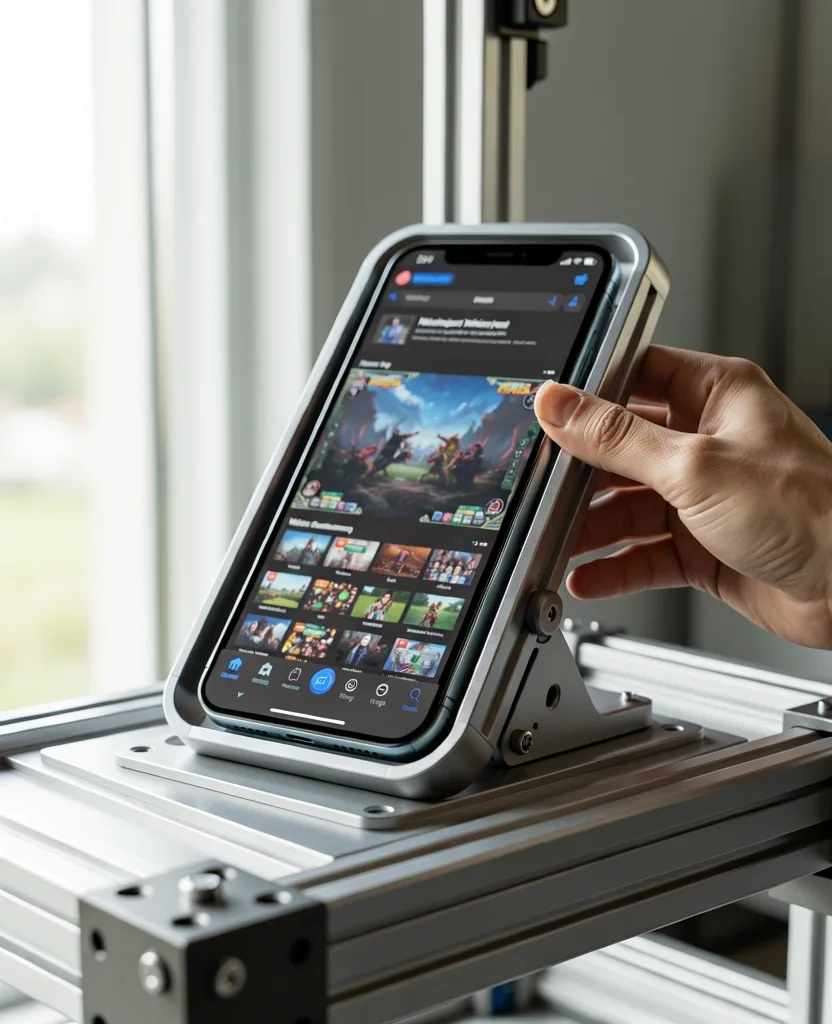
Our QA protocol follows a rigid checklist to ensure that every build meets the Sylvaronix standard for high-fidelity mobile experiences.
Runtime Stability
- Crash Free Rate Target 99.9%
- ANR Threshold < 0.4%
- Memory Ceiling Leak Zero Tolerance
Network Integrity
- Latency Compensation Client-Side
- Data Payload Optimization High
- Packet Loss Resilience Verified
Asset Pipeline
- Texture Compression ASTC/ETC2
- MIP Map Balancing Automated
- Draw Call Budget Checked
Detailed Benchmarks
Request our full technical stack specification for enterprise-grade mobile deployments.
Performance is not an afterthought; it is the core mechanic.
Native Performance
For high-fidelity 3D environments, we prioritize native platform optimization. This guarantees the lowest possible overhead and maximum access to device-specific GPU capabilities.
Cross-Platform Reach
When rapid multi-device reach is the objective, we utilize hardened C# frameworks that provide a unified codebase without sacrificing the stability of the build.
Vetted Implementations

Latency Management

Asset Stream Optimization

Compiler-Level Safety
Technical Inquiry^03
Clarifying our procedural rigor for technical stakeholders.
We manage fragmentation through a tiered optimization strategy. Assets are dynamically served based on device profile classes (Low, Mid, High). Each tier undergoes hardware stress testing on physical devices to ensure the frame rate and heat profiles remain within acceptable safe ranges.
Our automated CI/CD pipeline runs unit tests on every commit. Human-led technical discovery and hardening sprints conclude every two weeks with a stable "Verification Build." This build is then reviewed against our internal security and performance benchmarks.
Yes. Our publishing and optimization agreements include long-tail technical support. We monitor crash logs and performance telemetry after deployment, providing quarterly updates to account for new OS versions and SDK changes from major hardware manufacturers.
Ready to review our engineering specs?
Contact our technical team to discuss your project parameters and see how our methodology aligns with your publishing goals.
Sylvaronix HQ
150 Elgin Street, 8th Floor
Ottawa, ON K2P 1L4, Canada